- AdventHealth
Choose the health content that’s right for you, and get it delivered right in your inbox.
This Clinician’s View is written by AdventHealth Urogynecologist Rebeccah Briskin, DO.
Bladder control problems affect an estimated 43 million, amounting to nearly one in six U.S. adults. Of those, nearly 16 million have urge urinary incontinence (UUI), a common symptom of overactive bladder (OAB) characterized by a sudden, intense urge to urinate, often followed by involuntary leaks before reaching the bathroom. It is a condition that tends to worsen with age and can negatively impact quality of life, including social interactions, mental health and sleep. As a urogynecologist who has cared for hundreds of women and witnessed their struggles, I am passionate about seeking better ways to improve their lives.
That is why I am excited about the U.S. Food and Drug Administration’s (FDA) recent approval of the Altaviva™ device for urge urinary incontinence, a new treatment option that marks a significant step forward for these patients who must often balance a therapy’s effectiveness against negative side effects, procedural invasiveness and overall treatment burden. A minimally invasive implantable tibial neuromodulation (ITNM) therapy, Altaviva is inserted near the ankle during a procedure that does not require sedation or imaging. It sits just below the skin and delivers electrical stimulation to the tibial nerve that extends into the sacral plexus, helping to regulate communication between the bladder and the brain to help restore bladder function.
The approval of Altaviva was supported by data from the TITAN 2 trial, which enrolled 126 adult patients with urge urinary incontinence across 29 clinical trial sites in the U.S. The soon-to-be published 12-month findings from that trial include the following:
- 80% of patients reported their condition had improved.
- 61% of patients experienced a 50% or greater reduction in urge incontinence episodes.
- 70% of patients reported a clinically meaningful improvement in their health-related quality of life, as measured by the OAB-q-HRQL score.
Based on this evidence, AdventHealth is now offering Altaviva as another treatment option for UUI in Central Florida.
Addressing a Sensitive and Often Untreated Condition
Despite its impacts, urinary incontinence is a silent struggle for many. In fact, only around 25 percent of people with general bladder control issues ever discuss their symptoms with a doctor. Too often, they cope with their bladder control challenges behind closed doors, convinced that relying on diapers or pads is their only path forward. In medical school, I was naturally drawn to women’s health and believe in helping women feel confident as we work together to address the personal challenges they face because of their UUI. Earning trust is imperative to delivering the best possible care, and a key part of achieving that for patients with urinary incontinence is encouraging candid conversations helping them feel comfortable discussing the uncomfortable.
Confronting Challenges with Current Urge Urinary Incontinence Treatments
While we have multiple approaches available to treat urge urinary incontinence that can be effective, they come with a variety of challenges:
- There are two primary classes of oral medications. Antimuscarinics, including older drugs like oxybutynin, block the action of acetylcholine at muscarinic receptors, reducing the activation of the parasympathetic nervous system. While they can be effective for some, these drugs have shown an association with cognitive impairment in patients over 65 and can also cause side effects such as dry mouth, blurred vision and constipation. Another class of oral drugs – the beta 3 agonists – treat urge urinary incontinence by relaxing the bladder's detrusor smooth muscle, which helps increase bladder capacity and reduce the sudden urge to urinate. However, side effects, which can include elevated blood pressure and headaches, also come with these medications. Additionally, they can be cost prohibitive for many patients.
- Pelvic floor physical therapy works by strengthening pelvic floor muscles, which can reduce the frequency and severity of leakage episodes but is dependent on long-term compliance.
- Botox injected into the bladder muscle can also be very effective, but the results are temporary, requiring lifelong repeat injections to achieve continued relief.
- Percutaneous tibial nerve stimulation (PTNS) is a minimally invasive treatment that uses a small needle electrode inserted near the tibial nerve and connected to a simulator to send electrical pulses. It is effective but carries the treatment burden of a weekly 30-minute session for 12 weeks in a row and then once a month to maintain results.
- Sacral nerve modulation is a more invasive procedure that involves placement of a neuroelectrode along the third sacral nerve root using fluoroscopy. While it is a more long-term treatment option, patient falls can displace the battery, and weight loss can also affect positioning of the battery pocket, resulting in the need for revision surgeries. This has become an increasing challenge with the rise in use of GLP-1 medications.
Taking a New Approach to Reduce Urge Urinary Incontinence
Unlike the medications or injections that target detrusor contractions, the Altaviva implant targets the tibial nerve that helps modulate normal bladder function. During a minimally invasive, same-day, outpatient procedure that doesn't require sedation or fluoroscopic imaging, the 1.67 x 4.4 cm device is placed suprafascially – under the fat, over the fascia, and away from the nerves and blood vessels. It sends electrical pulses to the tibial nerve, helping restore communication between the sacral nerves that control the bladder and the brain. This stimulation aims to restore normal bladder function and reduce urgency and leakage episodes. Compared to other implant treatment options, Altaviva allows for a quicker, less-invasive procedure with a lower risk of injury and less recovery, and the therapy is completely active when the patient goes home.
Additional benefits of the Altaviva device include the following:
- It is lead-free, designed to have a 15-year battery lifespan under expected therapy settings and delivers therapy automatically, requiring no daily intervention or manual adjustments from the patient.
- Recharging takes up to 30 minutes when using the default recharging speed, eliminating the need for daily at-home charging equipment.
- The device is MRI-compatible for patients who may require medical imaging.
While suitable for most patients with urge urinary incontinence, Altaviva is contraindicated if a patient has an active ulcer or sore on the ankle, poor blood supply, nerve damage, peripheral arterial disease or metal implanted within 5 centimeters of the device.
Innovating to Improve Whole-Person Health
There have been tremendous advances in the treatment of urinary incontinence in the past decade, and I look forward to continual innovation in the years to come. At AdventHealth, we believe in enhancing whole-person health – mind, body and spirit. That means continually seeking better ways to not only improve medical conditions but to help restore and enhance overall quality of life. Giving women the confidence and freedom to leave the house without pads and fear of incontinence and the discomfort of pull-ups is one of the most fulfilling parts of my work. I believe Altaviva is a significant step forward and will serve as another great tool in our toolkit.
Recent Blogs
AMR Genomic Intelligence: The Use of Whole Genome Sequencing to Inform Phenotypic Testing and Rapid Treatment Protocols
Jose Alexander, MD, Medical Director of Clinical Microbiology at AdventHealth Central Florida, shares how his team is integrating whole genome sequencing into daily laboratory decision-making, using...
Myocardial Recovery is Possible After LVAD Implantation for Heart Failure
AdventHealth is the first Florida hospital to join the Myocardial Recovery International Network, a consortium exploring LVAD-mediated myocardial recovery.
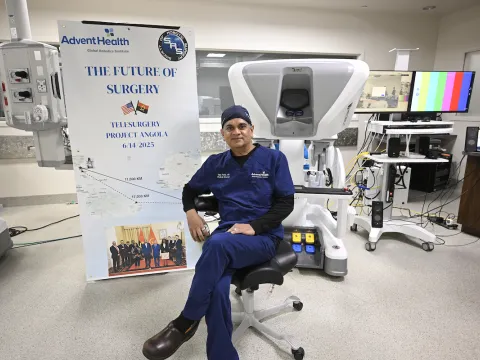
Forging New Frontiers in Telesurgery to Improve Global Health Access, Outcomes and Equity
In our latest Clinician’s View, Dr. Patel shares his team’s journey toward improving global health access, outcomes and equity through telesurgery, including how they are ensuring the safety, quality...
Surgical Resection of Rare Pediatric Desmoid Jaw Tumor Optimizes Outcome and Helps Patient Avoid Chemotherapy
In our latest clinician’s view, Dr. Lopez shares how he, along with a multidisciplinary clinical team, were able to plan for this complex case and completely remove the tumor surgically, allowing...
New Treatments for Cardiac Amyloidosis Emerging, but Timely Diagnosis Remains Essential to Improving Outcomes
In our latest Clinician’s View, Marcos Hazday, MD, FACC, director of the hypertrophic cardiomyopathy program at AdventHealth Orlando, discusses the new cardiac amyloidosis therapeutics available...
Transforming Care for Patients with Inflammatory Bowel Disease Through a Dedicated, Interdisciplinary Specialty Clinic
In our latest Clinician’s View, Dr. Seminerio shares her personal passion for improving care for patients with inflammatory bowel disease (IBD) and talks about how AdventHealth’s recently established...
Accelerating Identification and Treatment of Infectious Diseases Through On-site Next-Generation Sequencing
Mortality rates from treatment-resistant pathogens continue to rise, and the culprits include a wide and growing range of mycobacteria and fungi.
As a former clinically practicing physician who now...
From the Bench to the Field: Developing a Better, Multidisciplinary Approach to ACL Injury Risk Mitigation
With high risks for recurring knee injury and long-term osteoarthritis, an ACL injury can be devastating for young athletes.
That is why the Rothman Orthopaedics Florida at AdventHealth...
Innovative Technologies Enhance the Precision and Outcomes of Pediatric Head & Neck Surgery
In our latest Clinician’s View, Dr. Lopez shares why his team recently became among the first in the country to begin using innovative technologies like near-infrared autofluorescence (NIRAF)...
Accelerating Orthopedic Innovation Through Research
While the field of orthopedics has made incredible strides in recent decades, challenges and opportunities remain.
In our latest Clinician’s View, Rothman Orthopaedics Florida at AdventHealth Director...
New Zero-Exchange Transseptal Access Tools Enhance Safety and Accuracy of Left-Heart Access for Surgical Heart Procedures
Every year, approximately 1.5 million surgical heart procedures require access to the left side of the heart for catheter-based treatments like atrial fibrillation (AF) ablation, left atrial appendage...
Donor Care Units Optimize Organ Donation and Honor Donor Heroes
To help bridge the gap and save more lives, AdventHealth and OurLegacy, east Central Florida’s federally designated organ procurement organization (OPO), recently opened an innovative, centralized and...