

February is Black History Month, a time to recognize the history and contributions of Black Americans throughout U.S. history. It’s also a time to raise awareness for some of the health disparities that affect Black Americans. Health disparities are differences in the incidence, prevalence, and mortality of a disease and the related adverse health conditions that exist among specific population groups.
Mesha Gay Brown, MD, Regional Neuroscience Medical Director for the Rocky Mountain Region, shed light on some of the health disparities that exist for Black Americans in the neurosciences.
“We know that Black and Hispanic patients are less likely to see a neurologist than white patients. They are more likely to be treated in emergency departments and have prolonged hospital stays,” said Dr. Brown. “In stroke treatment, blood pressure is often inadequately controlled in Black and Hispanic individuals compared to their white counterparts.”
Dr. Brown is a board-certified epileptologist and an expert in the evaluation and treatment of patients with seizures and epilepsy.
“There are also disparities in patients who receive epilepsy surgery. Black patients are significantly less likely to undergo epilepsy surgery compared to white patients,” said Dr. Brown. “Knowing the data so that we can affect some of the changes is so important.”
According to the Epilepsy Foundation, Black Americans are more likely to be diagnosed with epilepsy than white Americans. Black Americans are also more likely to experience seizures which continue for five minutes or longer without stopping.
“I had a patient who continued to have seizures for years and within six months of seeing her, she became seizure free. She told me that in the past, she had struggled to find a provider who listened,” said Dr. Brown. “I think the nuances of what you say as a health care provider really matter. For me it’s about recognition of what someone is going through. Symptoms aren’t something that just exist on paper. This is their quality of life.”
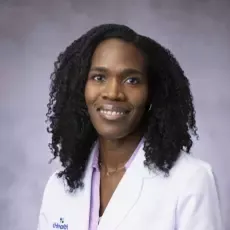
Mesha Gay Brown, MD offers comprehensive treatment options for patients from their first seizure and beyond. She has extensive experience in the management of patients with epilepsy, including medication management, epilepsy surgery, surgical devices such as the vagus nerve stimulator (VNS), responsive neurostimulation (RNS) and deep brain stimulation (DBS), as well as clinical trials. She’s committed to providing optimal care to the epilepsy community and to continuous growth utilizing the most current evidence-based practices.
6 items. To interact with these items, press Control-Option-Shift-Right Arrow.
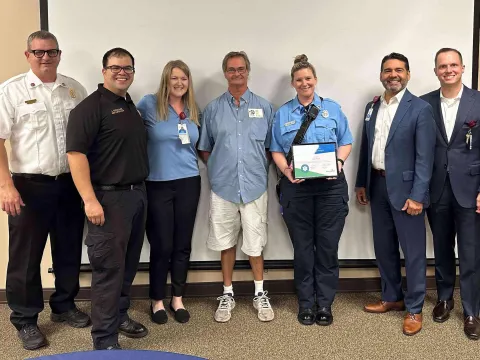



AdventHealth Zephyrhills thanks first responders during EMS week
AdventHealth Zephyrhills honors first responders during EMS Week.
Former patient returns to AdventHealth Littleton to comfort moms in the NICU
A former patient of AdventHealth Littleton returned to recognize NICU moms on Mother’s Day.
Winners of inaugural Grayson Murray Be Kind to One Another Legacy Award announced
The AdventHealth Championship announced the winners of the inaugural Grayson Murray Be Kind to One Another Legacy Award: longtime Korn Ferry Tour player Josh Teater is the winner of the player/caddie...
AdventHealth Shawnee Mission Speaks with FOX4 About Strengthening Your Relationship with Your Child
Parenting is one of the most rewarding, yet challenging journeys in life. Setting healthy boundaries with clear expectations will allow for your child’s emotional growth which aids in their overall...
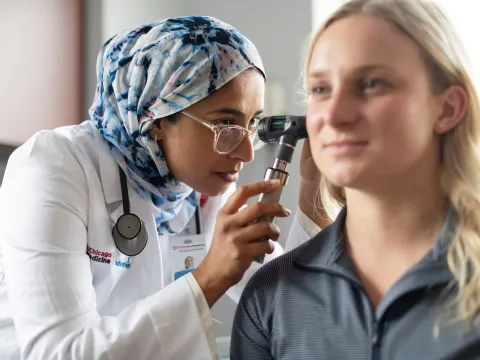
UChicago Medicine AdventHealth offers free medical clinic
The clinic is designed to increase access to care for people who are uninsured or underinsured.
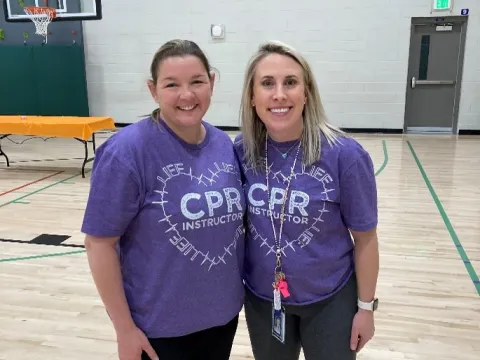
AdventHealth Littleton nurse practitioner empowers families to save lives
Jodi McAndrew, NP knows the importance of CPR training. That’s why she has made it her mission to bring CPR training to Littleton Public Schools.