


When a baby boy is born, both testicles are usually located in the scrotum — the sac of skin just below the penis. But in some cases, one or both testicles don’t move down into this position before birth. This condition, called an undescended testicle, or cryptorchidism, is one of the most common concerns parents bring to a pediatric urologist.
“It’s natural for parents to worry when something seems out of place,” says Abd-El-Rahman “A.R.” Abd-El-Barr, MD, a pediatric urologist at AdventHealth Tampa. “But with the right evaluation and timely care, most boys with an undescended testicle go on to develop normally and live healthy, active lives.”
What Is an Undescended Testicle
Before a baby is born, the testicles form inside the abdomen. In most cases, as the baby grows, the testicles gradually move down through a small tunnel in the lower belly, called the inguinal canal, into the scrotum. This usually happens during the final months of pregnancy.
When one or both testicles don’t complete this journey, it’s known as an undescended testicle. According to the Urology Care Foundation and the American Urological Association, the problem affects about 3% of newborn babies and up to 21% of premature babies.
In most cases, the undescended testes drop on their own within the first few months of life. If they haven’t descended after six months, you should bring your child to a pediatric urologist for an evaluation.
Sometimes, the testicle is felt higher up in the groin. In other cases, it’s located inside the abdomen and can’t be felt at all. “The position of the testicle helps us determine the best treatment approach,” Dr. Abd-El-Barr says.
Causes of an Undescended Testicle
What causes an undescended testicle isn’t always known. In some cases, it’s related to a mechanical issue as the fetus develops. In other cases, hormonal or genetic factors may play a role. Family history can also be a factor — boys whose fathers or brothers had an undescended testis are at slightly higher risk.
“It’s important for parents to know that this isn’t anyone’s fault,” Dr. Abd-El-Barr says. “It’s something that happens during development and can be successfully corrected in most cases.”
Undescended Testicle Symptoms
As a parent, you can usually tell if your newborn’s testicle hasn’t descended. The scrotum may look smaller, flatter or asymmetrical.
Your child’s pediatrician will also likely notice the condition during a routine exam. If they can’t feel the testicle, they may order imaging tests to determine where it’s located. Sometimes, an undescended testicle is confused with retractile testicles — testicles that move up and down between the scrotum and groin. Retractile testicles don’t require treatment, but undescended testes do.
The Importance of Early Treatment
If an undescended testis isn’t corrected, it can cause problems later in life, including:
- A greater likelihood of testicular torsion (twisting of the testicle)
- An increased risk of testicular cancer
- Reduced fertility
- Risk of trauma to the testicle
“Treating an undescended testicle early — ideally between 6 and 18 months of age — gives the best chance for normal development and fertility later,” Dr. Abd-El-Barr says. “It also lets us monitor that testicle more easily as the child grows.”
Treatment Options
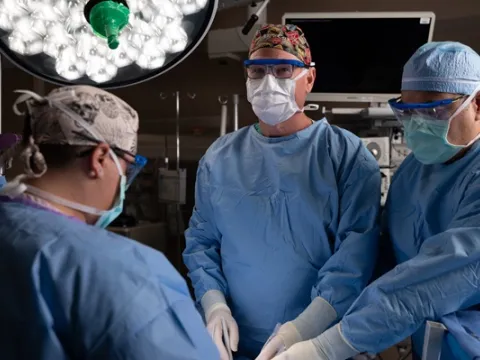
In most cases, your child’s doctor will recommend undescended testicle surgery, called an orchiopexy. This procedure moves the testicle into the scrotum and secures it in place to prevent it from moving back up into the abdomen. The surgery is performed under general anesthesia, typically as an outpatient procedure.
When your child’s doctor can feel the testicle in the groin, they make a small incision during the surgery to gently reposition it. If they can’t feel the testicle, they may use a minimally invasive laparoscopic approach to locate and move it. Most children recover quickly from an orchiopexy and can return to normal activities within a few days.
“Parents are often surprised by how straightforward the procedure is and how quickly their child recovers from it,” Dr. Abd-El-Barr says. “Our goal is always to make sure the experience is as smooth and comfortable as possible for the whole family.”
Pediatric Urologic Care for Your Child’s Whole Health
At AdventHealth Tampa, families find more than advanced surgical expertise — they find a team that cares for each child’s body, mind and spirit. “We understand how stressful it can be for parents to hear their child may need surgery,” Dr. Abd-El-Barr says. “That’s why we take time to explain every step to ensure families feel informed and supported.”
Whether your child’s condition requires close observation or a minor procedure, our pediatric urology team offers personalized care in a calm, child-friendly environment.
To learn more or schedule a consultation, call Call813-756-1755 to connect with AdventHealth Medical Group Pediatric Urology at Tampa.

About Dr. A.R.
Abd-El-Rahman (A.R.) Abd-El-Barr, MD, is a board-certified pediatric urologist who is committed to providing compassionate and conscientious care to his patients with the help of a multidisciplinary team, to provide optimal outcomes.
12 items. To interact with these items, press Control-Option-Shift-Right Arrow. These items are in a slider. To advance slider forward, press Shift-Command-Right Arrow. To advance slider backward, press Shift-Command-Left Arrow.








Blog
Bedwetting in Children: When to Worry and How to Help
Bedwetting isn’t a failure — it’s a phase. Learn how AdventHealth Tampa helps kids gain confidence and stay dry.
Blog
Circumcision: What To Know Before Making a Decision
Learn about newborn circumcision, including benefits, risks and when a circumcision revision may be needed, so you can make the best choice for your baby.
Blog
Gallbladder Problems: How to Know You Need Surgery
Gallbladder disease is hard to identify. AdventHealth Tampa helps you understand the signs and offers advanced gallbladder removal procedures.
Blog
Have a Hernia? When to Have Surgery
Hernias can be painful. They aren’t emergencies, but ignoring symptoms in the long term can be dangerous. Get expert advice about when it’s time to have surgery.
Blog
Phimosis: What It Is and What Parents Should Know
Learn what phimosis is, what causes it and when to see a pediatric urologist at AdventHealth Tampa for your child’s care.
Blog
When Kids Get UTIs: What Parents Should Know
UTIs in kids are common — but treatable. Learn the signs, causes and when it’s time to see a specialist.
Blog
ECMO & CVOR: Specialized Training for Specific Needs
ECMO and cardiovascular OR teams work together to help patients with serious heart and lung conditions. Learn more about these teams at AdventHealth Tampa.
Blog
LDCT: One Minute to Catch Cancer
Low-dose CT scans can identify lung cancer early when it’s most treatable. Learn about this quick, effective screening option with AdventHealth Tampa.
Blog
Pulsed Field Ablation: A Breakthrough Option for AFib Treatment
Experienced heart specialists at AdventHealth Tampa offer pulsed field ablation (PFA) for AFib, a safer, faster treatment option than traditional ablation methods.
Blog
Building Awareness to Stop the Spread of Breast Cancer
Learn more about breast cancer, including why preventive care is so important, treatment options and how we can partner with you on your journey to wholeness.
Blog
3D Imaging Improves Patient Outcomes for Breast Cancer Care
AdventHealth Tampa leads the fight against breast cancer with new Clarix Imaging technology, helping surgeons improve outcomes and reduce repeat surgeries.
Blog
Test Your Knowledge of Essential Health Screenings for Men
Learn what health screenings are important for men to prioritize and why it’s essential to have a trusted primary care provider.