

Authored by Sharad Rajpal, MD, FAANS, FCNS, Spine and Neurosurgeon at AdventHealth Avista.
To learn more or request an appointment, visit: Sharad Rajpal, MD | Neurosurgery | Louisville, CO | AdventHealth
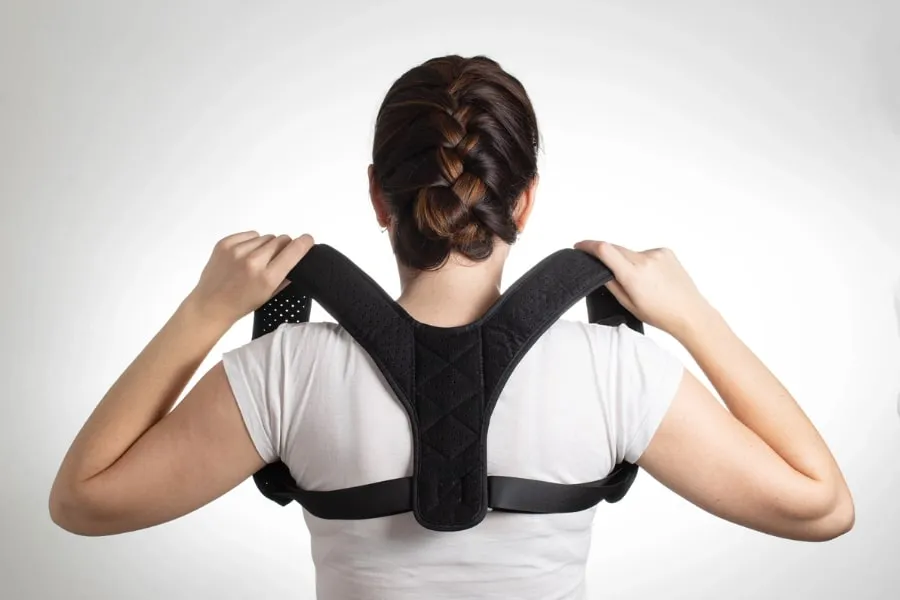
Posture-correcting wearables are trending and claiming to help people suffering from scoliosis, kyphosis (or “round back”), shoulder, neck and back pain. With more and more people working from home, slouching over laptops, and spending hours on their phones, it’s no surprise that these devices are exploding in popularity. As a spine surgeon, I see posture-related neck and upper-back pain weekly in my clinic. But are these devices worth it and what do they actually do? While posture-correcting sports bras and “smart” garments won’t magically fix your spine issues, they can play a meaningful role if used correctly.
What are posture-correcting garments designed to do?
Most posture-correcting clothes aren’t designed to actually “hold your spine in place.” Instead, they work via several principles.
- Shoulder retraction: elastic panels or straps are designed to gently pull your shoulders back to counter the rounded-shoulder posture we naturally tend to fall into when sitting at a desk or using our phones.
- Spinal alignment cues: the devices may add subtle resistance cues or vibrations when you slump, nudging you back toward a more neutral position.
- Proprioceptive feedback: when the garment tightens or tugs, it’s reminding your body’s internal GPS that you are slouching. Creating that awareness is often more valuable than the garment itself.
Can posture-correcting wearables actually be helpful?
Some patients may benefit from these garments in very specific situations, including people with posture-related neck or upper-back pain, desk workers who sit for prolonged amounts of time, and anybody wanting occasional reminders to straighten up. Strategically using posture-support garments can help people feel less muscle fatigue, especially in the upper traps and the back of the neck. It is really important to understand, however, that wearables cannot fix posture without complementary muscle strengthening to support good posture. One analogy is to think of posture-correcting clothing as training wheels: they are helpful at first, but not the end goal.
What does the research say?
The science supporting the long-term effectiveness of posture correcting devices is mixed and often considered weak. Some studies have shown that certain wearables can help reduce “forward-head” posture, improve shoulder position, provide helpful reminders to correct slouching, and decrease perceived effort in neck and back muscles. However, long-term improvements in posture only occurs when these devices are used in conjunction with strengthening, movement, and improved ergonomics. It is critical to understand that these devices do not permanently “correct” anything when used solely by themselves.
Alternative methods to improve posture (that may work just as well)
If posture-correcting garments aren’t in the budget or you would prefer more natural methods, there are some highly effective alternatives where small changes can provide big results. Physical therapy can closely identify any specific muscle imbalances driving your posture and help customize a program for your needs. Performing strengthening exercise at home or in the gym, and more specifically rows, scapular retraction exercises, thoracic extension work, core strengthening and posterior-chain training. Making ergonomic adjustments to your workspace, such as raising your computer screen to eye level, using proper keyboard positioning, using a lumbar support, keeping elbows close to your body, and taking frequent movement breaks every 30–45 minutes. In general, consider movement more than just about “perfect posture”: the more you move, the healthier you stay.
Potential risks or downsides of posture products
Although these products are generally considered safe, consumers should be aware of a few important pitfalls. An over-reliance on using these products can lead to a “weakening” of the posture muscles. These products may not be ideal for people with spine and/or shoulder injuries, hypermobility, or even certain respiratory conditions. Some people may find these devices uncomfortable and poorly fitting. Wearing them too tightly can cause restricted breathing, irritate joints, or cause rubbing and altered biomechanics. If using these devices causes worsening pain or numbness, then it’s most likely not the right device for you.
How to use posture-correcting garments safely and effectively
As a spine surgeon, proper use of these devices is important. Here are some recommendations regarding using these devices safely and effectively. Wear them for only a few hours (~1–3 hours) per day, with special consideration for those times when excessive poor posture may be present (computer work, long meetings, travel, etc.). Pair the device with strengthening exercises and use them less as your posture muscles gain strength. Use them as reminders and not as braces to help reinforce healthy habits without making your body dependent on the product(s).
The future of posture wearables
Exciting research and developments are coming in the world of posture correcting devices, including smart fabrics, vibration feedback, posture-tracking apps, even garments that are capable of measuring muscle activation and load on the spine in real time. The next generation of products will therefore focus on prevention by identifying patterns before problems and pain start.
The bottom line
Posture-correcting sports garments and wearables may be beneficial when used mindfully and correctly. These products work best when they are paired with strengthening, good ergonomics, and regular movement. Most importantly, these devices can be a useful tool in your wellness toolkit and can complement a broader approach to spine health. If you have pain or concerns about your posture, speak with a healthcare professional to determine the best approach for you.
12 items. To interact with these items, press Control-Option-Shift-Right Arrow. These items are in a slider. To advance slider forward, press Shift-Command-Right Arrow. To advance slider backward, press Shift-Command-Left Arrow.












Press Release
AdventHealth Sebring is growing to provide more advanced heart care options to Highlands County and beyond
AdventHealth Sebring is growing by adding more than 100,0000 square feet of new clinical space, expanding the hospital’s capacity and advancing the technology used to diagnose and treat heart disease...
News
DAISY Award goes to two nurses at AdventHealth Gordon
AdventHealth Gordon team members Ian Sorrow, RN, and Mellissa Pumphrey, RN, have been named DAISY Award recipients.
News
For one Palm Coast resident, a hard year of injuries mirrors a community trend
When 75-year-old Grand Haven resident Jan Weida looks back on the past year, she describes it as a time marked by unexpected setbacks and the steady support she relied on to keep moving forward.
News
AdventHealth Redmond named Blue Cross Blue Shield Blue Distinction® Center for Bariatric Surgery
AdventHealth Redmond has been recognized as a Blue Cross Blue Shield Blue Distinction® Center for Bariatric Surgery.
News
Freytag Cancer Center’s first year expands access to cancer care in Flagler County
As the need for timely, specialized cancer care continues to rise in Flagler County, the Freytag Cancer Center at AdventHealth Palm Coast has emerged as a vital resource for individuals and families...
News
Improving rural communities’ access to high-quality care close to home
Federal leaders and providers met at the White House to discuss rural health care, including insight from AdventHealth Gordon’s Andrew McCue, MD.
News
AdventHealth Medical Group adds three orthopedic surgeons, expanding access to care in Volusia County
AdventHealth Medical Group has added three orthopedic surgeons in Volusia County.
News
AdventHealth Medical Group expands access to care in Summerville
AdventHealth Medical Group is excited to announce the opening of a new primary and urgent care clinic in Summerville this February.
News
Elisa Jaramillo-Mayor, MD, joins AdventHealth Medical Group Family Medicine at Adairsville Health Park
AdventHealth Medical Group is pleased to announce that Elisa Jaramillo-Mayor, MD, has joined AdventHealth Medical Group Family Medicine at Adairsville Health Park.
News
Robust community partnerships bring national recognition for local institution
Through its dedication to mission and service-learning, AdventHealth University earns a Carnegie Classification for Community Engagement.
News
These whole-health habits may slow your brain’s aging, groundbreaking study reveals
AdventHealth researchers discovered that everyday movement may help support brain health long before memory or focus becomes a concern.
News
Tourist’s life saved through fate, teamwork and cutting-edge care
When a cardiac emergency struck at a local theme park, quick action from an AdventHealth team member played a crucial role in saving a life and reuniting a family.