

12 items. To interact with these items, press Control-Option-Shift-Right Arrow. These items are in a slider. To advance slider forward, press Shift-Command-Right Arrow. To advance slider backward, press Shift-Command-Left Arrow.









News
Clinical Trial Evidence on Diet and Type 1 Diabetes Outcomes
A new systematic review of clinical trials has found that no single dietary pattern consistently improves blood sugar control or weight management in youth and adults living with type 1 diabetes.
News
How Diet Shapes Gut Microbes and Energy Absorption
What we eat has a big impact on the bacteria living in our gut, which in turn affects how our bodies use energy—something that plays a major role in the development and treatment of obesity.
News
AdventHealth Neuroscience Institute Launches NIH-Funded THRIVE Trial
AdventHealth Neuroscience Institute has launched THRIVE, an NIH-funded clinical trial led by Lauren Oberlin, PhD, geriatric neuropsychologist and neuroscience researcher.
News
AdventHealth Tampa Enrolls First Patient in the Tectonic CAD IVL Trial
On September 19, 2025, AdventHealth Tampa successfully enrolled its first patient in the Tectonic CAD Intravascular Lithotripsy (IVL) Trial, led by Dr. Mahmaljy and his team.
News
MANIFEST US Study Presented as a Late-Breaking Clinical Trial at AHA
The cardiovascular team is excited to highlight the MANIFEST US study, which was presented on November 10th as a Late-Breaking Clinical Trial at the American Heart Association (AHA) Scientific...
News
Nourishing Your Gut: Dr. Karen Corbin on the Power of Fiber
Dr. Karen Corbin, associate investigator at the AdventHealth Translational Research Institute for Metabolism and Diabetes in Orlando, emphasizes the essential role of diet in maintaining a healthy gut...
News
Southeast Region – Redmond Campus: AdventHealth Recognized as Top Enroller Nationally for the CARVTOP-ICD Trial
AdventHealth Research Institute (AHRI) is proud to announce that the Southeast Region’s Redmond Campus has been recognized as the top enrolling site nationally for the CARVTOP-ICD trial.
News
Stiff Arteries Linked to Early Memory Decline: New Findings by Dr. Amani Norling
Amani Norling, PhD a post-doctoral fellow at the AdventHealth Neuroscience institute, has published a notable paper titled “Arterial stiffness moderates the link between NfL and cognition: The IGNITE...
News
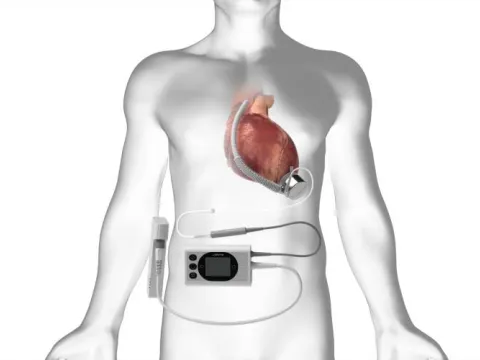
First BrioVAD Implant Successfully Completed
On September 24, the Transplant team successfully implanted the first BrioVAD device at AdventHealth, a major milestone in the ongoing INNOVATE 2254936 Vidic trial.
News
Advancing T1D Science: New TRI Publications
Researchers at the AdventHealth Translational Research Institute continue to drive meaningful progress in Type 1 diabetes—work that is being recognized not just in Central Florida, but throughout the...
News
The Next Frontier: Preventing Type 1 Diabetes Before It Starts
Recent research led by AdventHealth’s Translational Research Institute and others reveals that Type 1 diabetes develops gradually and can now be detected early through blood tests, opening the door to...
News
Advancing Heart Care: A New Chapter with the BrioVAD Study
The AdventHealth Research team recently completed Core Training for the INNOVATE 2254936 Vidic trial, bringing this novel device to AdventHealth.