Back in control after prostate cancer
A new therapy treats urinary incontinence after prostate cancer treatment.

For many men, beating prostate cancer comes with a significant side effect: urinary incontinence. But men now have more options than ever to deal with this common treatment side effect.
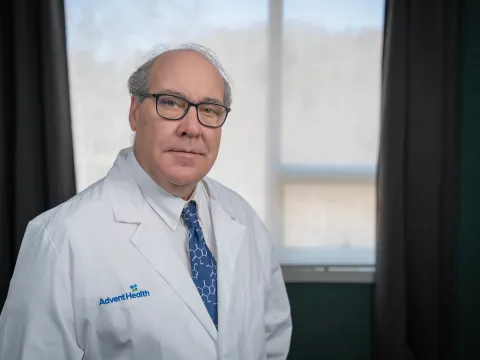
“There is an increasing array of options for treating urinary incontinence,” says Nathaniel Coddington, MD, a functional reconstructive urologist with AdventHealth Medical Group Urology at DTC. “We’re better at helping men regain their quality of life than ever before.”
Understanding Post-Surgery Incontinence
Up to one in five men who undergoes prostate cancer treatment experiences bladder leakage that doesn’t improve over time, Dr. Coddington says. For many, this means a few drops during vigorous activity. But for a small percentage, the problem can be much more severe.
“They can’t go out and be social, they can’t exercise, and they often struggle with depression and weight gain,” Dr. Coddington says. “That kind of severe case is rare, but it can be devastating.”
New Treatment Options
For decades, the only option for severe incontinence was a surgically implanted device called an artificial urinary sphincter, which includes a pump that must be squeezed to allow urination. While effective, this approach can be cumbersome for some patients.
Today, men have more choices, including the ProACT system — a minimally invasive option that has brought relief to many of Dr. Coddington’s patients.
The ProACT system consists of two small, adjustable silicone balloons that are implanted near the bladder neck, where the prostate was once located. These balloons, which are connected to small ports under the skin, can be easily adjusted in the doctor’s office to provide the right amount of support, helping to prevent leaks.
“ProACT is going to make a lot of men a lot happier,” Dr. Coddington says.
Looking to the Future
With these advances in treatment, a prostate cancer diagnosis doesn’t have to be as daunting as it once was.
“When you see a urologist to discuss options, be aware there are new developments in this field,” Dr. Coddington says. “Oncologists work to give you quantity of life, and we give quality of life.”
To Test or Not to Test
Prostate cancer is the second-leading cause of cancer death in men, but early detection can make a significant difference. The five-year survival rate for prostate cancer found early is 99.8%, according to the CDC.
The first step in prostate cancer screening is a simple blood test called the prostate-specific antigen (PSA) test. Thanks to advances in biomarker testing, today’s methods are better at identifying aggressive cancers, reducing the risk of unnecessary treatment.
“We’ve come a long way,” says Nathaniel Coddington, MD, a functional reconstructive urologist with AdventHealth Medical Group. “We’re much better at treating men who need to be treated and not treating those who don’t.”
When to consider screening:
Callout
99.8%
The five-year survival rate for prostate cancer when found early.
Are You Ready to Take Control?
Take the first step toward reclaiming your quality of life after prostate cancer surgery. Call AdventHealth Medical Group Urology at DTC to schedule a consultation at Call303-649-3710.
_________________________________________________________________________________________________________________________________________

Nate Coddington, MD, is a functional reconstructive urologist who treats patients of all ages. He provides care for urinary obstruction from the kidney to the urethra, urinary incontinence and prostate cancer survivorship. As part of his practice, he performs urinary fistula robotic reconstruction, urethroplasty, incontinence and implant surgery, including artificial urinary sphincter, ProACT procedures, sling surgery, urinary fistula and grafting.
Dr. Coddington is motivated by bringing restoration to people’s lives. He pursued a career in reconstructive urology to help return the quality of life his patients deserve. He loves the reward of seeing his work’s positive impact on people.
Dr. Coddington earned his medical degree at Washington University in St Louis. He completed his residency at the University of Texas Health Science Center and his genitourinary reconstructive surgery fellowship at the University of Colorado.
Schedule a visit with Dr. Coddington here.

AdventHealth Sebring is growing by adding more than 100,0000 square feet of new clinical space, expanding the hospital’s capacity and advancing the technology used to diagnose and treat heart disease...
AdventHealth Medical Group is pleased to welcome Aaron W. Barton, MD, MS, a board-certified endocrinologist, to its growing team of physicians, expanding access to specialized, whole-person care for...

People living in and around the Auburndale area will soon have faster access to life-saving care right in their own community.

Access to emergency care is about to get easier for families in Ocala.

AdventHealth Hendersonville is expanding access to specialized obstetrical care with the opening of a dedicated Obstetrical Emergency Department at The Baby Place.

This marks the second time that AdventHealth South Overland Park was named a Top General Hospital by The Leapfrog Group.

AdventHealth Ottawa is pleased to announce it welcomed the first baby born in 2026 at the AdventHealth Ottawa Family Birth Place.

The new year began with the arrival of the first baby of 2026 at The Baby Place at AdventHealth Hendersonville.

AdventHealth West Florida hospitals celebrated the first babies of 2026.

Cody and Ann Peratt of Kansas City, Mo., welcomed their baby girl on January 1, 2026, at 12:01 am, at AdventHealth Shawnee Mission. Baby Girl Peratt weighed in at 6 pounds 7 ounces and measured at 20...
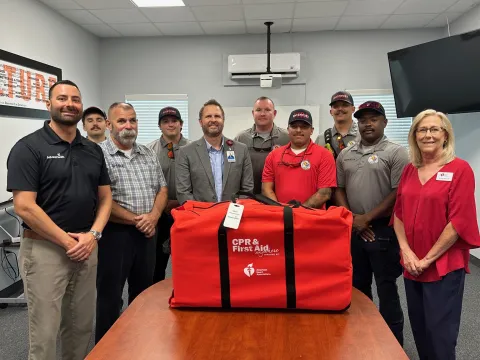
First responders across Polk County now have new training tools to teach community members to save lives of people in cardiac arrest. AdventHealth Heart of Florida and the American Heart Association...

Due to an increase in respiratory illnesses across the region, including flu, COVID-19 and RSV, AdventHealth is implementing temporary visitor restrictions and safety protocols at its North Carolina...
